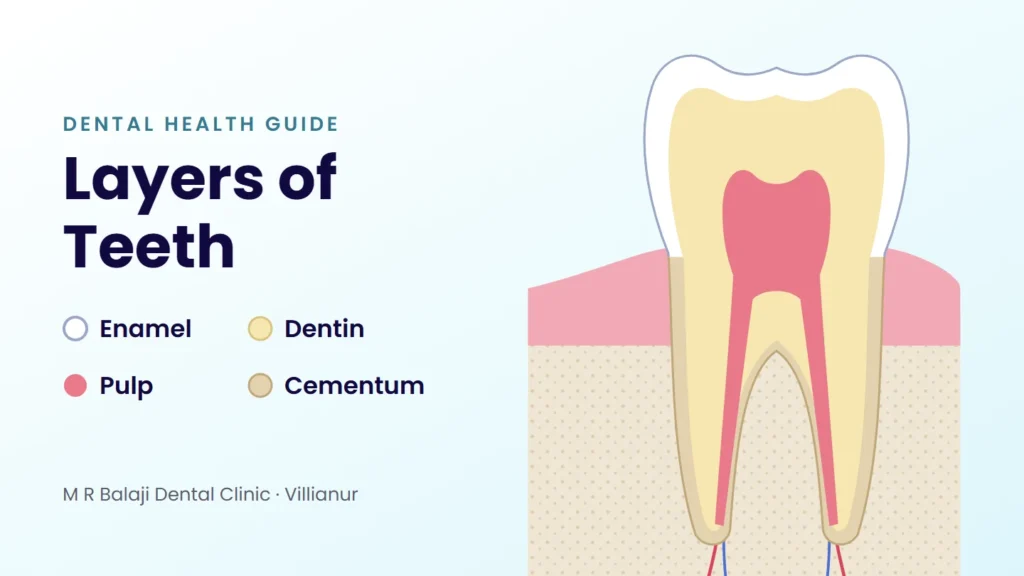
Your teeth may look like simple white blocks, but each one is a living structure built in layers. Knowing the layers of teeth helps you understand why a small cavity can turn painful, why some teeth feel sensitive to cold, and why early treatment is always simpler. In this guide, we explain each layer in plain language: what it does, how it gets damaged and how you can protect it.
Key Takeaways
- Every tooth has four layers: enamel, dentin, pulp and cementum.
- Enamel is the hardest substance in the human body, but it cannot grow back once it is lost.
- Dentin has tiny tubes that carry feelings to the nerve, which is why worn enamel leads to sensitivity.
- The pulp holds the nerves and blood vessels. Decay that reaches it usually needs root canal treatment.
- Cementum covers the root and helps hold the tooth in the jaw. It becomes exposed when gums recede.
The Two Main Parts of a Tooth
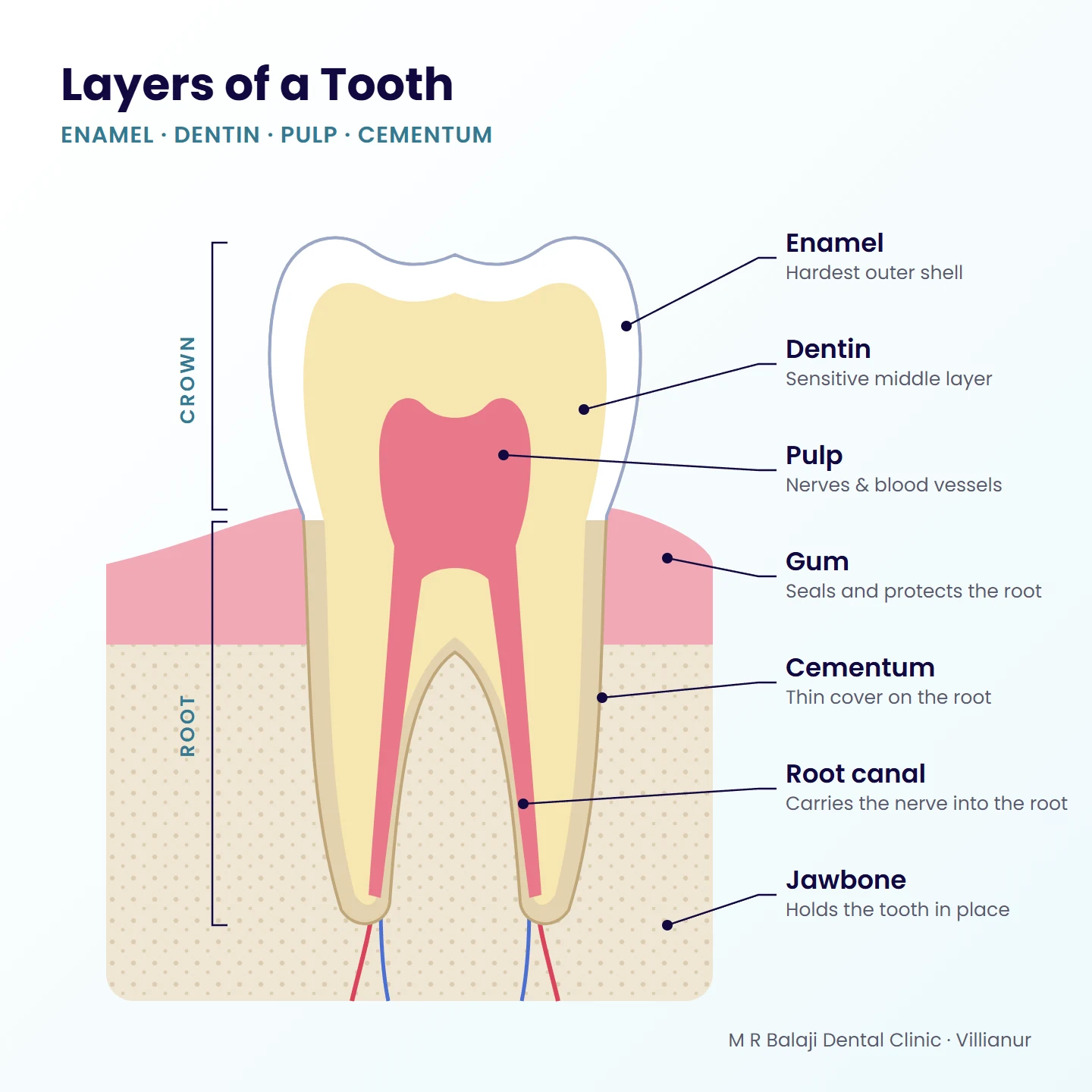
Before we look at the layers, it helps to know the two main parts of a tooth:
- Crown: the part you can see above the gum line.
- Root: the part hidden below the gums, anchored in the jawbone.
The layers wrap around these parts like the rings of a tree, from the hard outer shell to the soft, living centre.
The 4 Layers of Teeth
1. Enamel: The Protective Outer Shell
Enamel is the white, glossy layer that covers the crown. It is about 96% mineral, which makes it the hardest substance in the human body, harder even than bone. It protects your tooth from the pressure of chewing and from hot, cold and acidic food.
What you should know:
- Enamel has no living cells, so the body cannot repair or regrow it.
- Acids from sugary snacks, soft drinks and plaque bacteria slowly dissolve it. This is the first step of tooth decay.
- Children’s milk teeth have thinner enamel, which is why cavities spread faster in kids. Read: Milk Teeth vs Permanent Teeth.
Early signs of enamel damage: chalky white spots, rough edges, small chips, or a twinge when you eat sweets.
2. Dentin: The Sensitive Middle Layer
Just under the enamel sits dentin (also spelled dentine), a slightly softer, yellowish layer that makes up most of the tooth. Dentin is filled with thousands of microscopic tubes, called dentinal tubules, that lead towards the nerve.
When enamel wears away or gums pull back, these tubes are exposed. Cold water, hot tea or even a breath of cold air can then reach the nerve and cause a quick, sharp pain. This is tooth sensitivity. Read: Tooth Sensitivity: Causes & Relief.
What you should know:
- Dentin’s natural yellow colour shows through when enamel thins, so worn teeth can look darker.
- Decay moves faster through dentin than through enamel, because dentin is softer.
- At this stage, a cavity can usually still be fixed with a simple filling.
3. Pulp: The Living Heart of the Tooth
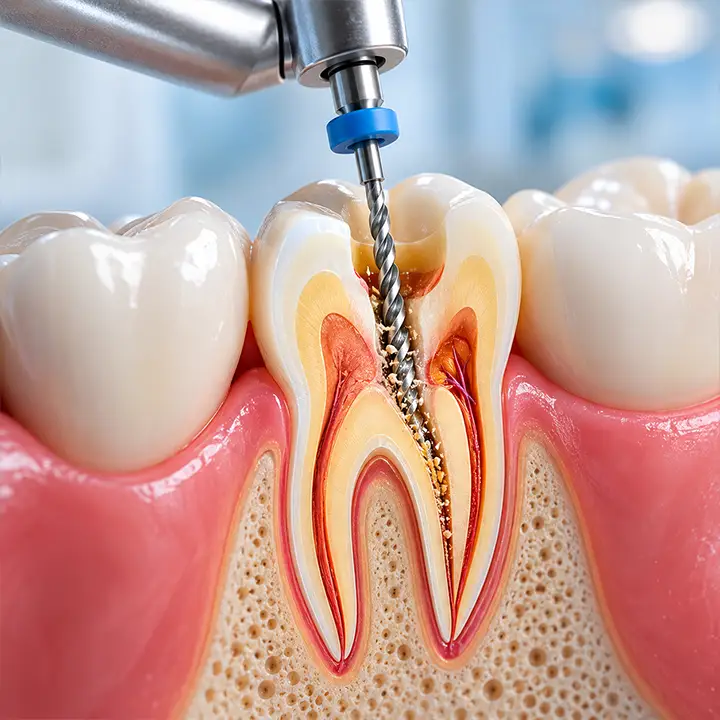
At the centre of every tooth is the pulp, a soft tissue that contains nerves, blood vessels and connective tissue. It sits in the pulp chamber inside the crown and runs down through narrow root canals to the tip of each root.
The pulp keeps the tooth alive and lets it sense temperature and pressure. When decay, a deep crack or an injury lets bacteria reach the pulp, it becomes inflamed or infected.
Warning signs that the pulp is affected:
- Throbbing pain, or pain that wakes you up at night
- Sensitivity to hot or cold that lingers after the food or drink is gone
- Swelling of the gum or face, or a pimple-like bump near the tooth
- A tooth that turns grey or dark
These signs usually mean you need root canal treatment, which removes the infected pulp, cleans the canals and saves your natural tooth. Today’s root canal treatment is far gentler than its reputation. Read: Is a Root Canal Painful? What Really Happens.
4. Cementum: The Root’s Protective Cover
Cementum is a thin, bone-like layer that covers the root of the tooth below the gum line. Tiny fibres called the periodontal ligament connect the cementum to the jawbone. Together, they hold the tooth firmly in place and act as a natural cushion when you bite.
What you should know:
- Cementum is softer than enamel, so it wears and decays more easily once it is exposed.
- Gum disease and brushing too hard can make gums recede, uncovering the cementum and root. This often causes sensitivity near the gum line. Read: Gum Health: The Secret to a Healthy Smile.
The Supporting Structures Around Your Tooth
The four layers of teeth do not work alone. Three structures around each tooth keep it healthy and stable:
- Gums (gingiva): seal the tooth at the neck and protect the root.
- Periodontal ligament: the fibres that hold the tooth in its socket.
- Jawbone (alveolar bone): the foundation that holds the roots.
When gum disease damages these supports, even a tooth with no cavity can become loose.
How Tooth Decay Travels Through the Layers
Understanding tooth anatomy shows why early check-ups matter so much:
| Layer affected | What you may feel | Usual treatment |
|---|---|---|
| Enamel | Often nothing; white or brown spots | Fluoride care, better brushing, sealants |
| Dentin | Sensitivity to sweet or cold | Tooth-coloured filling |
| Pulp | Throbbing or night pain, lingering sensitivity | Root canal treatment |
| Beyond the root | Swelling, abscess, loose tooth | Root canal treatment or extraction, followed by a replacement option |
The earlier decay is found, the simpler and more comfortable the treatment. A cavity caught while it is still in the enamel may not need any drilling at all.
How to Protect Every Layer of Your Teeth
- Brush twice a day for two minutes with a soft-bristled brush, using gentle circles instead of hard scrubbing. Read: How to Brush Your Teeth Properly.
- Use a fluoride toothpaste. Fluoride strengthens enamel and helps reverse very early weak spots. Read: Fluoride Toothpaste Guide.
- Clean between your teeth every day with floss or an interdental brush.
- Cut down on sugary and acidic drinks. When you do have them, rinse your mouth with water afterwards.
- Wait about 30 minutes after acidic food before brushing, so softened enamel can settle first.
- Wear a night guard if you grind your teeth, because grinding wears enamel down quickly.
- Visit your dentist every six months. Problems in the enamel and dentin often cause no pain until they reach the pulp. Read: Why Regular Dental Check-Ups Save Your Teeth.
Frequently Asked Questions
How many layers does a tooth have?
A tooth has four layers: enamel, dentin, pulp and cementum. Enamel covers the crown, cementum covers the root, dentin forms most of the tooth, and the pulp sits at the centre.
Which is the hardest layer of a tooth?
Enamel is the hardest layer of a tooth. In fact, it is the hardest substance in the human body, made of about 96% minerals.
Can tooth enamel grow back?
No. Enamel has no living cells, so it cannot grow back once it is lost. Fluoride can strengthen enamel that is only beginning to weaken, but lost enamel has to be restored by a dentist, for example with a tooth-coloured filling.
Why do my teeth hurt when I drink something cold?
When enamel wears thin or gums pull back, the dentin underneath is exposed. Its tiny tubes carry the cold feeling straight to the nerve, which causes a short, sharp pain. A dentist can find the cause and suggest the right treatment.
What happens when tooth decay reaches the pulp?
The pulp becomes inflamed or infected, which often causes throbbing pain, pain at night or swelling. Root canal treatment removes the infection and saves the natural tooth. Waiting too long can lead to an abscess or losing the tooth.
Can a tooth be saved once the pulp is infected?
Yes, in most cases. With timely root canal treatment, the tooth is cleaned, sealed and protected with a crown, and it can keep working for many years.
Gentle Care for Every Layer, in Villianur
At M R Balaji Dental Clinic, we explain what is happening inside your tooth before we start any treatment, whether it is a simple filling, gum care or a gentle root canal. If you feel anxious about dental visits, we also offer nitrous oxide sedation to help you stay calm and comfortable.
Noticed sensitivity, a dark spot or tooth pain? Do not wait for it to reach the pulp. Message us on WhatsApp or contact us to book your visit with Dr. Balaji M, your dentist in Villianur, Puducherry.
Sources and further reading: American Dental Association (MouthHealthy): Tooth decay; World Health Organization: Oral health.