When life gets busy, a dental check-up is often the first thing we postpone, especially when nothing hurts. But regular check-ups are one of the simplest ways to protect your teeth. They catch small problems while they are still easy to fix, which means less discomfort, fewer visits and smaller treatments later.
Key Takeaways
- Most people need a dental check-up and cleaning every six months.
- Check-ups find problems early, before they cause pain or need bigger treatment.
- A routine check-up is gentle, usually takes 30 to 45 minutes and includes time for your questions.
Why Small Problems Become Bigger Ones.
Most dental problems develop slowly and quietly. Without regular check-ups:
- a small cavity that needed a simple filling can reach the nerve and need a root canal treatment
- mild gum inflammation can turn into gum disease that affects the bone
- a tiny crack can grow until part of the tooth breaks
Treating these problems early is quicker, more comfortable and costs less than treating them later. That is why we often say that prevention is the most affordable dental treatment of all.
What Happens During a Dental Check-Up?
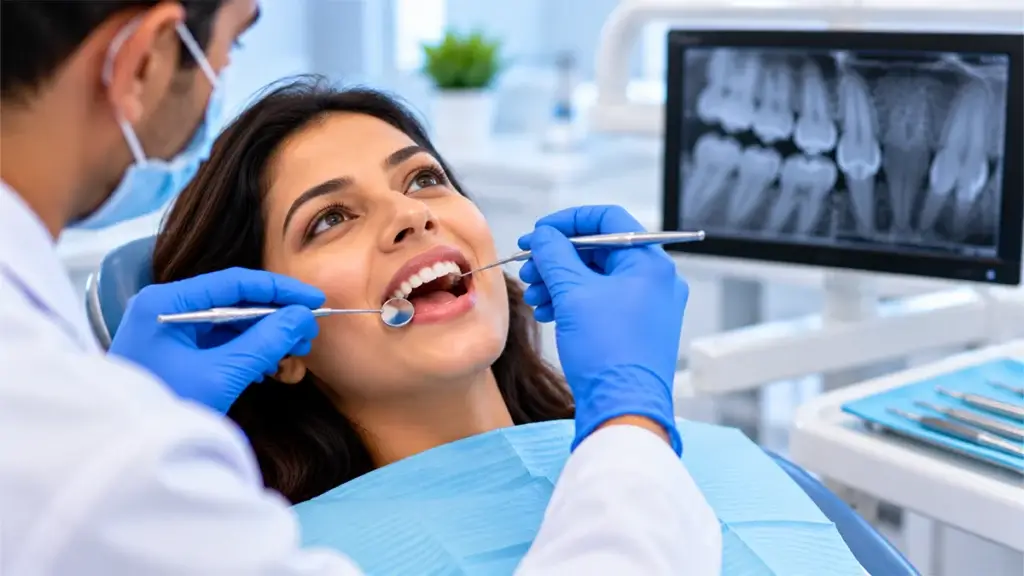
If it has been a while since your last visit, here is what to expect:
- A friendly chat: we ask about any concerns, your medical history and any medicines you take.
- A careful examination: we check each tooth for decay, cracks and wear, and look at old fillings or crowns.
- A gum check: we look for bleeding and measure the small spaces around your teeth to spot early gum disease.
- X-rays, only if needed: to see between teeth and below the gum line.
- An oral screening: a quick, painless look at your tongue, cheeks and throat for anything unusual.
- Cleaning: scaling and polishing to remove the tartar that brushing cannot reach.
We then explain what we found in plain language and, if anything needs treatment, talk you through your options. There is never any pressure to decide on the spot.
A check-up is not about finding problems. It is about making sure small things stay small.
Dr. Balaji M
The Benefits Go Beyond Your Teeth.
- Less pain: problems treated early rarely become painful emergencies.
- Fresher breath: removing tartar helps with bad breath.
- More confidence: clean, healthy teeth help you smile freely.
- Better overall health: research has linked gum disease with conditions such as diabetes and heart disease.
Nervous About Visiting the Dentist?
You are not alone, and it is not something to be embarrassed about. These simple steps can help:
- Tell us you are nervous. We will slow down, explain each step and agree on a signal so you can ask for a break at any time.
- Book a morning visit so you have less time to worry during the day.
- Bring headphones and listen to calming music.
- Keep up regular visits. The more familiar the clinic feels, the easier each visit becomes.
For patients with strong dental anxiety, we also offer nitrous oxide sedation, which helps you feel calm and relaxed while staying awake.
Frequently Asked Questions
How often should I have a dental check-up?
Most people should have a check-up every six months. If you have gum disease, diabetes, a history of frequent cavities or you smoke, your dentist may recommend visits every three to four months.
What if I have not been to a dentist for years?
It is never too late. Your first visit may take a little longer, but we will never judge you. We will check everything carefully, explain what we find and plan any treatment at a pace that suits you.
Do children need regular check-ups?
Yes. Children should see a dentist by their first birthday and then every six months. Early visits help prevent cavities and make children comfortable at the dentist.
Is a dental cleaning painful?
A routine cleaning is not usually painful. You may feel some vibration and mild sensitivity, especially if there is a lot of tartar. Let us know if anything feels uncomfortable and we will adjust.
Ready for your check-up? Contact us or message us on WhatsApp. Walk-ins and appointments are both welcome.
Sources and further reading: NHS: Dental check-ups; World Health Organization: Oral health.