Losing a tooth can affect how you chew, speak and smile. Replacing it is about more than looks. It protects your bite and the teeth around the gap. Two of the most common options are a dental implant and a bridge. Both work well. The right choice depends on your mouth, your health and your preferences.
Key Takeaways
- A dental implant replaces the root and the tooth, without touching the neighbouring teeth.
- A bridge uses the teeth on either side of the gap as supports and is usually completed faster.
- A careful check-up, often with an X-ray, shows which option suits you best.
Why Replace a Missing Tooth?
- neighbouring teeth can slowly drift or tilt into the gap
- the opposite tooth can grow down into the space
- your bite can change, putting extra load on other teeth
- the jawbone in the gap gradually shrinks over time
- chewing on one side only can become a habit
What Is a Dental Implant?
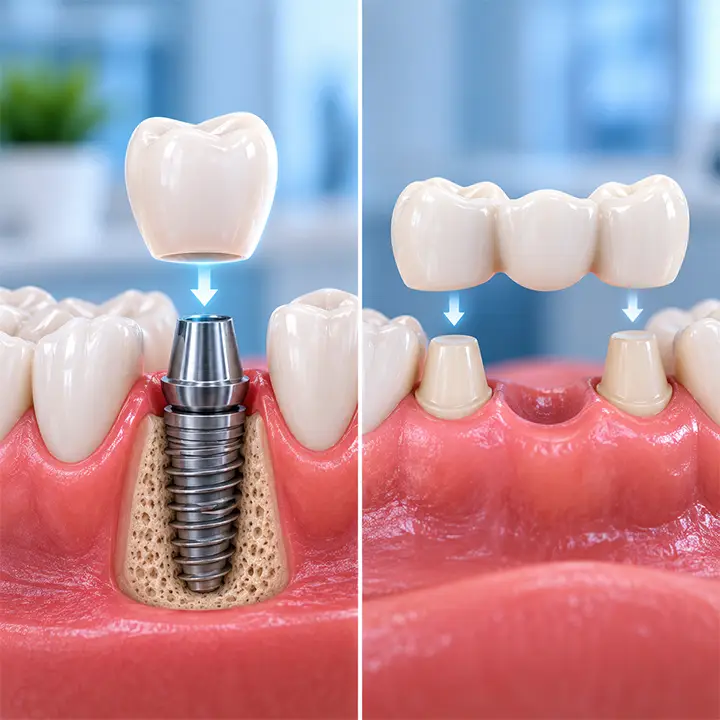
An implant is a small titanium post placed in the jawbone where the root used to be. Over the following weeks, the bone bonds with the implant. A crown is then fixed on top, giving you a tooth that looks and works much like a natural one.
- Does not involve the neighbouring teeth, so they stay untouched.
- Helps preserve the jawbone by replacing the root.
- Takes longer, usually a few months from start to finish, because the bone needs time to heal.
- Needs enough healthy bone and good general health.
What Is a Dental Bridge?
A bridge is a false tooth held in place by crowns on the teeth on either side of the gap. These supporting teeth are shaped so the crowns can fit over them, and the bridge is fixed in place permanently.
- Quicker, usually completed in two or three visits.
- No surgery is needed.
- The neighbouring teeth are reshaped to hold the crowns.
- A good option when the neighbouring teeth already need crowns.
There is no single best option for everyone. The best choice is the one that fits your mouth, your health and your life.
Dr. Balaji M
Implant or Bridge: Which Suits You?
An implant is often a good choice when the teeth next to the gap are healthy and you have enough bone. A bridge may suit you better if the neighbouring teeth are already heavily filled or crowned, or if you prefer a quicker treatment without surgery. Conditions such as uncontrolled diabetes and smoking can affect healing, so we always review your health first.
Dr. Balaji M holds a Fellowship in Oral Implant Dentistry and Oral Surgery. Learn more about dental implants and crowns and bridges on our Services page.
Caring for Your New Tooth.
- brush twice a day and clean between your teeth every day
- use floss threaders or small interdental brushes to clean under a bridge
- keep up regular check-ups and cleanings
- avoid biting very hard objects such as ice or nut shells
Frequently Asked Questions
How long does a dental implant last?
With good daily care and regular check-ups, implants can last for many years. The crown on top may need replacing over time due to normal wear.
Is getting an implant painful?
Implant placement is done under local anaesthesia, so you should not feel pain during the procedure. Mild soreness for a few days afterwards is common and settles with simple care.
Can a bridge be fixed in one visit?
A bridge usually needs two or three visits: one to prepare the supporting teeth and take measurements, and another to fit the final bridge. A temporary bridge protects the teeth in between.
What if I do not have enough bone for an implant?
We will assess the bone with an X-ray. If there is not enough bone, we will explain the options, which may include a bridge or other approaches suited to your situation.
Not sure which option is right for you? Message us on WhatsApp or contact us, and we will explain your choices clearly.
Sources and further reading: American Dental Association (MouthHealthy): Implants; American Dental Association (MouthHealthy): Bridges.