Many parents ask us, “Why should we treat a milk tooth if it is going to fall out anyway?” It is a fair question. Understanding the difference between milk teeth and permanent teeth helps you see why both deserve the same care. In this guide, we explain how the two sets of teeth differ, when each one arrives, and simple ways to protect your child’s smile at every age.
Key Takeaways
- Children have 20 milk (temporary) teeth, which are slowly replaced by up to 32 permanent teeth.
- Milk teeth help your child chew, speak clearly and hold space for the permanent teeth growing underneath.
- Milk teeth have thinner enamel, so decay can spread faster. Brushing, a healthy diet and regular check-ups protect both sets.
What Are Milk Teeth and Permanent Teeth?
Milk teeth, also called baby teeth, primary teeth or temporary teeth, are your child’s first set of teeth. They usually start to appear at around six months of age, and most children have all 20 by about three years.
Permanent teeth, also called adult teeth, begin to come in at around six years of age. They gradually replace the milk teeth until about 12 to 13 years, and the wisdom teeth may follow in the late teens or later. These are the teeth your child will keep for life.
The Main Differences Between Milk Teeth and Permanent Teeth.
| Milk teeth | Permanent teeth | |
|---|---|---|
| Number | 20 | Up to 32 (28 without wisdom teeth) |
| When they appear | From about 6 months to 3 years | From about 6 years to 13 years (wisdom teeth later) |
| Size | Smaller | Larger and stronger |
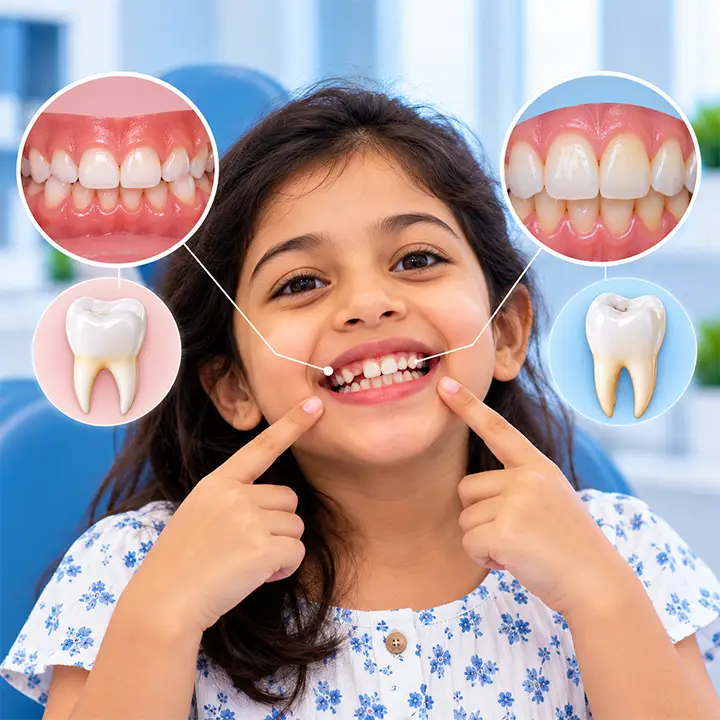
| Colour | Whiter, almost milky | Slightly more cream or yellow in tone |
| Enamel | Thinner, so decay can spread faster | Thicker and more resistant |
| Roots | Short and thin; they slowly dissolve so the tooth can fall out | Long and strong, made to last for life |
Do not worry if your child’s new front teeth look a little more yellow than the milk teeth beside them. This is normal. Permanent teeth naturally look less white next to the very white milk teeth.
Why Milk Teeth Matter, Even Though They Fall Out.
Some milk teeth stay in the mouth until your child is 11 or 12 years old. During those years, they do important work:
- Eating well: healthy teeth help your child chew properly and enjoy a balanced diet.
- Clear speech: teeth help your child form sounds and words correctly.
- Saving space: each milk tooth holds the space for the permanent tooth growing beneath it. If a milk tooth is lost too early, nearby teeth can drift into the gap and the permanent tooth may come in crooked.
- Confidence: a comfortable, healthy smile helps children feel happy at school and with friends.
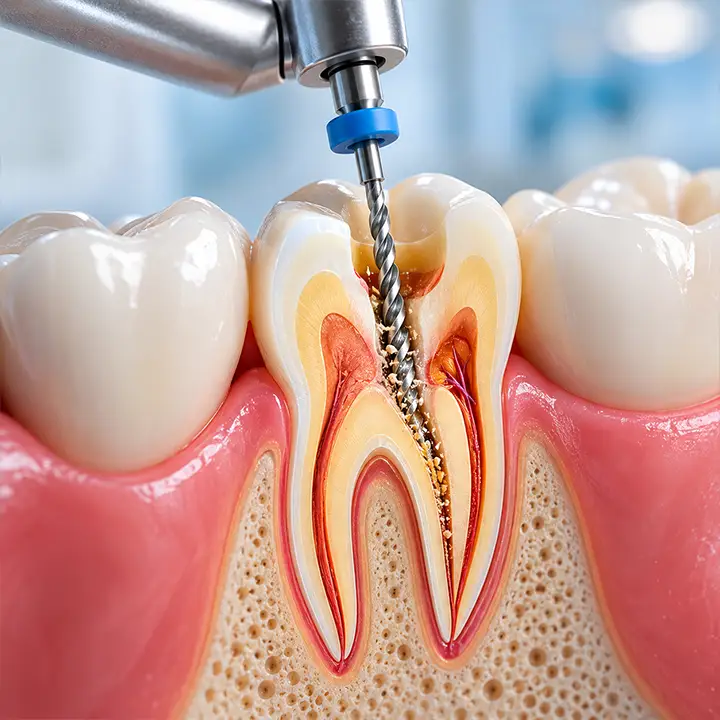
An infected milk tooth can also cause pain, swelling and sleepless nights, and in some cases it can affect the permanent tooth developing underneath. This is why we treat decay in milk teeth rather than simply waiting for them to fall out.
Milk teeth are temporary, but the habits and health they build last a lifetime.
Dr. Balaji M
When Do Permanent Teeth Come In?
Every child is different, so a few months earlier or later is usually nothing to worry about. As a general guide:
- Around 6 years: the first permanent molars appear at the back of the mouth, behind the last milk teeth. They do not replace any milk tooth, so they are often mistaken for milk teeth and easily missed while brushing.
- 6 to 8 years: the front milk teeth become loose and the permanent front teeth come in.
- 9 to 12 years: the canines and the teeth just behind them are replaced.
- Around 12 to 13 years: the second permanent molars appear.
My Child’s New Tooth Is Coming In Behind the Milk Tooth.
This is common, especially with the lower front teeth. Often the milk tooth becomes loose and falls out on its own within a few weeks, and the tongue gently moves the new tooth forward. If the milk tooth is still firm after a few weeks, or your child has pain, visit us for a quick check.
How to Care for Your Child’s Teeth at Every Age.
Babies, Before and After the First Tooth.
- Wipe your baby’s gums gently with a clean, soft, damp cloth after feeds.
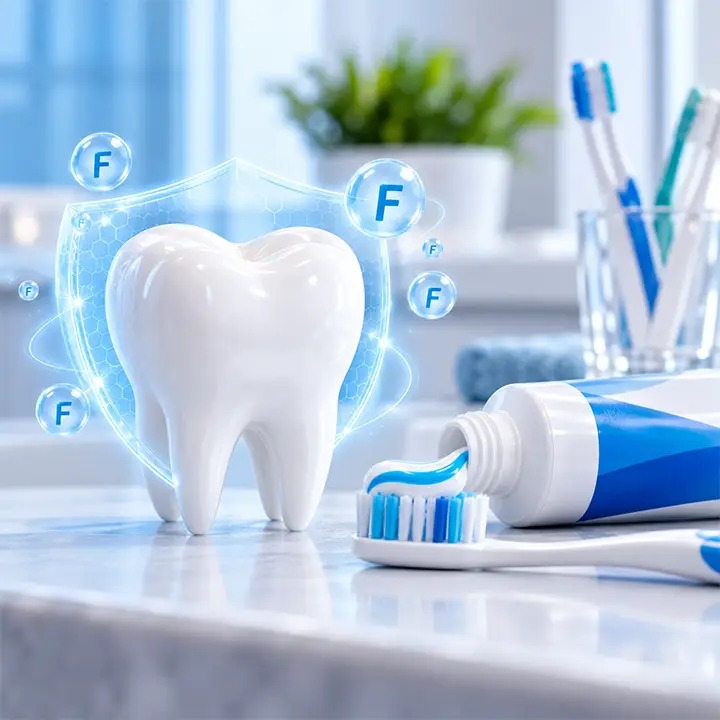
- Once the first tooth appears, brush twice a day with a soft baby toothbrush and a smear of fluoride toothpaste the size of a grain of rice.
- Avoid putting your baby to sleep with a bottle of milk or juice, as this can cause early decay.
Children Aged 3 to 6 Years.
- Use a pea-sized amount of fluoride toothpaste and brush for your child, or with them.
- Teach them to spit out the toothpaste rather than swallow it.
- Keep sweets, biscuits and sweet drinks to mealtimes instead of snacking through the day.
Children Over 6 Years.
- Keep supervising brushing until about seven or eight years of age, especially at night.
- Make sure the new back molars are brushed well, as their grooves trap food easily.
- Ask us about fissure sealants, a thin protective coating for the grooves of the permanent molars.
- If your child plays contact sports, ask about a mouthguard.
Read our guide to choosing the right fluoride toothpaste for more on how much toothpaste to use at each age.
When Should Your Child See a Dentist?
We recommend a first dental visit by your child’s first birthday, or within six months of the first tooth appearing, and then a check-up every six months. Early, friendly visits help children feel relaxed at the dentist and let us spot problems while they are small. Learn more about our kids dentistry care and our check-ups and prevention.
Please visit us sooner if you notice:
- brown or black spots, or holes, on the teeth
- toothache, swelling or a bad taste in the mouth
- a milk tooth that is still firm when the permanent tooth is already coming in
- a tooth that is broken or knocked out after a fall
If a permanent tooth is knocked out, hold it by the crown (the white part, not the root), keep it in a small cup of milk and call us straight away on +91 99440 87062. Quick action gives the best chance of saving it. A knocked-out milk tooth should not be put back, but your child should still be checked.
Frequently Asked Questions
How many milk teeth does a child have?
Children have 20 milk teeth: 10 in the upper jaw and 10 in the lower jaw. Most children have all of them by about three years of age.
At what age do milk teeth start to fall out?
Most children lose their first milk tooth at around six years of age, usually a lower front tooth. The last milk teeth usually fall out by about 12 years.
Should a decayed milk tooth be treated if it will fall out anyway?
Yes. Decay in a milk tooth can cause pain and infection and may affect the permanent tooth underneath. Some milk teeth stay until age 11 or 12, so treating them keeps your child comfortable and protects the space for the adult tooth.
Why do my child’s new permanent teeth look yellow?
Permanent teeth are naturally a little more cream or yellow in colour than milk teeth, and they look darker next to the very white milk teeth. This is normal. If you notice spots, stains or a single discoloured tooth, ask your dentist to check.
Is the first permanent molar a milk tooth?
No. The first permanent molars come in at around six years behind the last milk teeth, without replacing any tooth. Because they are easy to mistake for milk teeth, they need careful brushing and are often protected with sealants.
Have a question about your child’s teeth? Message us on WhatsApp or contact us. We make every visit gentle and friendly for little ones at our clinic in Villianur, Puducherry.
Sources and further reading: American Dental Association (MouthHealthy): Baby teeth; NHS: Taking care of children’s teeth.