A brighter smile can be a real confidence boost. With so many whitening products and online tips, it is hard to know what actually works and what might harm your teeth. This guide explains the facts so you can whiten safely.
Key Takeaways
- Tea, coffee, tobacco and age are the most common causes of tooth staining.
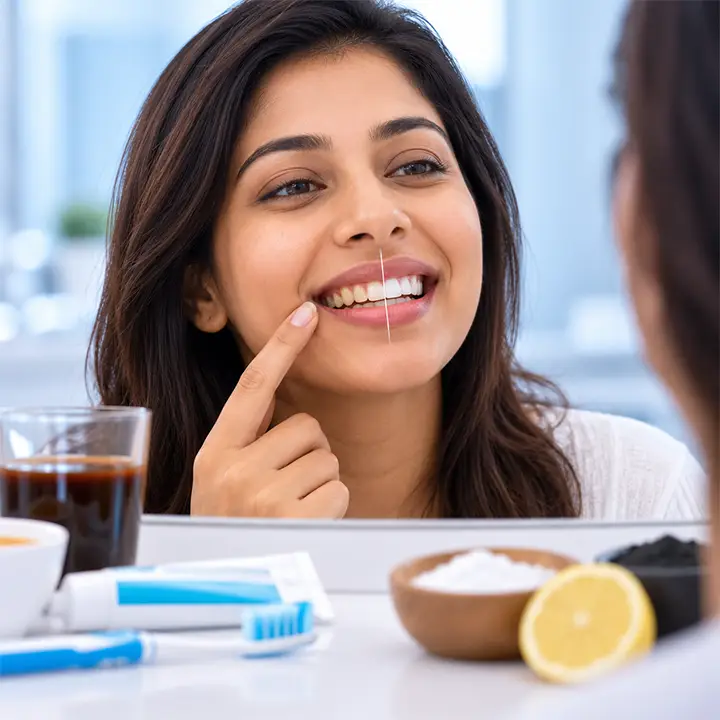
- Lemon, baking soda and charcoal can damage enamel and are best avoided.
- Dentist-supervised whitening is safe and effective, and starts with a check-up.
Why Do Teeth Change Colour?
There are two kinds of staining:
- Surface stains from tea, coffee, cola, turmeric-rich food, tobacco and paan.
- Deeper discolouration from ageing, as enamel thins and the yellower dentine shows through, or from some medicines or an old injury to a tooth.
Surface stains are often removed with a professional cleaning. Deeper colour changes need whitening or other cosmetic treatment.
What About Whitening Toothpaste?
Whitening toothpastes can help remove surface stains, but they do not change the natural colour of your teeth. Avoid using very abrasive pastes every day for long periods, as they can wear enamel.
Home Remedies to Avoid.
- Lemon juice or vinegar: the acid softens and erodes enamel.
- Baking soda scrubbing: too abrasive when used often.
- Charcoal powder: abrasive, and there is little evidence that it whitens.
- Unregulated whitening kits: may contain unsafe ingredients or burn the gums.
Healthy enamel is the foundation of a beautiful smile. Whitening should never come at the cost of your teeth.
Dr. Balaji M
How Dentist-Supervised Whitening Works.
- Check-up first: we make sure your teeth and gums are healthy and treat any decay before whitening.
- Cleaning: removing tartar and surface stains often makes a noticeable difference on its own.
- Choosing a shade: we agree on a natural-looking result that suits your smile.
- Whitening: a safe whitening gel is applied while your gums are protected.
Some people notice mild, temporary sensitivity after whitening, which usually settles within a few days. Note that crowns, veneers and fillings do not change colour with whitening, so we plan around them.
Whitening is part of our smile makeover treatments. For teeth that are chipped or very discoloured, options such as veneers or aesthetic restorations may give a better result.
Keeping Your Smile Bright.
- rinse with water after tea, coffee or cola
- avoid tobacco in every form
- brush twice a day with fluoride toothpaste
- keep up regular cleanings every six months
Frequently Asked Questions
Is teeth whitening safe?
Yes, when it is done or supervised by a dentist after a check-up. Problems are more likely with harsh home remedies or unregulated products.
How long do whitening results last?
Results often last many months and can last longer with good habits. Tea, coffee and tobacco will gradually stain teeth again, so touch-ups may be needed over time.
Will whitening work on my crowns or fillings?
No. Whitening only lightens natural tooth enamel. Crowns, veneers and fillings keep their original colour, so we plan treatment with this in mind.
Does whitening make teeth sensitive?
Some people feel mild sensitivity for a few days after whitening. Using a toothpaste for sensitive teeth helps, and we can adjust the treatment for your comfort.
Thinking about a brighter smile? Message us on WhatsApp or contact us, and we will help you choose a safe option.
Sources and further reading: NHS: Teeth whitening; American Dental Association (MouthHealthy): Teeth whitening.