Few dental treatments worry people as much as a root canal. Many of us have heard stories from friends or family that make it sound frightening. The truth is much more reassuring. With modern techniques and good local anaesthesia, a root canal usually feels much like having a filling, and it is the treatment that relieves tooth pain, not the cause of it.
Key Takeaways
- The pain people link with root canals usually comes from the infected tooth, not the treatment.
- With local anaesthesia, most patients feel pressure but not pain during a root canal.
- Root canal treatment saves your natural tooth, which is usually the best option for your long-term health.
Why Would I Need a Root Canal?
Inside every tooth is a soft core called the pulp, which contains nerves and blood vessels. When deep decay, a crack or an injury allows bacteria to reach the pulp, it becomes inflamed or infected. This is what causes the strong, throbbing toothache many people associate with root canals.
Common signs that a tooth may need a root canal include:
- lasting pain when you bite or chew
- sensitivity to hot or cold that stays after the food is gone
- a tooth that has darkened in colour
- swelling or a small pimple-like bump on the gum near the tooth
Sometimes there are no symptoms at all, and the problem is found during a check-up or on an X-ray.
What Happens During Root Canal Treatment?
- Numbing the tooth: we give a local anaesthetic and make sure the area is fully numb before we start.
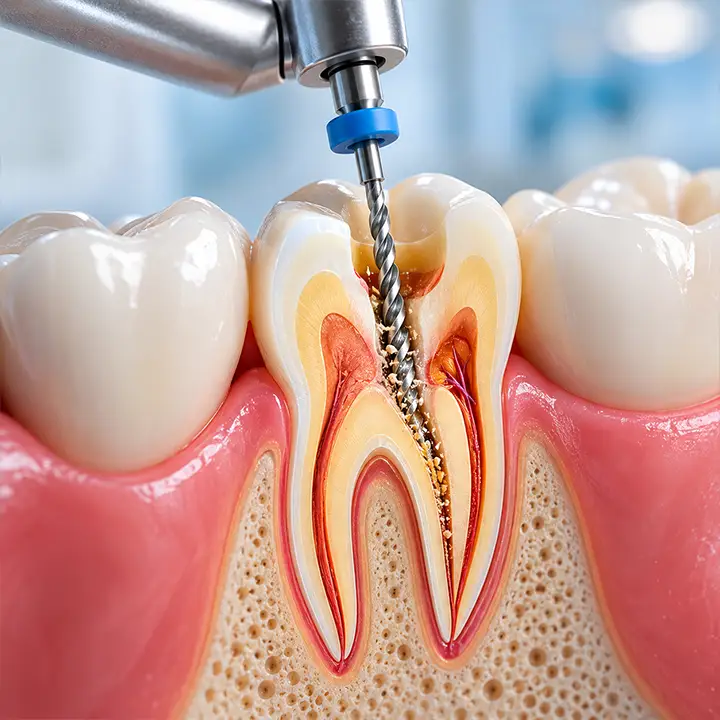
- Cleaning the inside: we make a small opening in the tooth, remove the infected pulp and carefully clean the root canals.
- Sealing: the cleaned canals are filled and sealed to stop bacteria from getting back in.
- Protecting the tooth: the tooth is restored with a filling and, for back teeth, usually a crown to protect it from breaking.
Depending on the tooth and the infection, treatment may be completed in one visit or spread over two or three visits.
A root canal does not cause the pain. It is how we take the pain away and keep your own tooth.
Dr. Balaji M
How Does It Feel Afterwards?
For a few days after treatment, the tooth may feel tender, especially when you bite. This is normal and usually settles with simple pain relief that your dentist recommends. Most people return to work or school the next day.
To help your tooth heal:
- avoid chewing hard food on that side until the tooth is fully restored
- keep brushing and cleaning between your teeth as usual
- come back for your crown or final filling as planned
- call us if you notice swelling or the pain gets worse instead of better
Root Canal or Extraction?
Removing a tooth may seem quicker, but keeping your natural tooth is almost always better. A missing tooth can cause neighbouring teeth to shift, affect your bite and eventually need a bridge or implant to replace it. A well-treated and well-restored root canal tooth can last for many years.
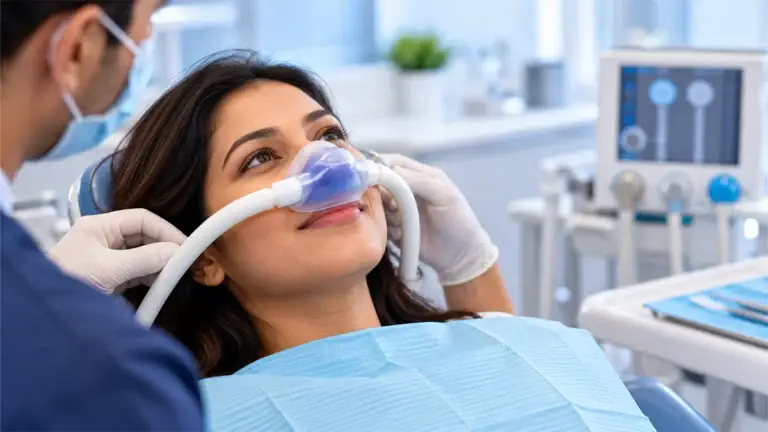
Learn more about root canal treatment and crowns on our Services page. If you feel anxious, nitrous oxide sedation can help you stay calm throughout.
Frequently Asked Questions
Is a root canal more painful than an extraction?
No. With local anaesthesia, most patients find a root canal about as comfortable as a filling. Both treatments are done with the area fully numb, but a root canal keeps your natural tooth.
How many visits does a root canal take?
Many root canals are completed in one or two visits. Teeth with more roots or a significant infection may need three. We will tell you what to expect before we begin.
Do I need a crown after a root canal?
Back teeth usually need a crown because they take strong chewing forces and can become more brittle after treatment. Front teeth can sometimes be restored with a filling alone.
Can I eat after a root canal?
You can eat once the numbness wears off, usually after two to three hours. Avoid chewing hard foods on the treated tooth until it has its final filling or crown.
If you have a toothache, please do not wait for it to get worse. Message us on WhatsApp or contact us, and we will see you as soon as we can.
Sources and further reading: NHS: Root canal treatment; American Dental Association (MouthHealthy): Root canals.